


Cannabis Education
Lawful Hemp Protection Act: What H.R. 9830 Could Mean for CBD, THC & Hemp

Sep
Lawful Hemp Protection Act: What H.R. 9830 Could Mean for CBD, THC & Hemp
Congress now has a bipartisan proposal that would do something very different from simply delaying the coming federal hemp restrictions: repeal them and replace them with a regulated national framework for hemp-derived cannabinoid products.
Published: September 15, 2026 | Last updated: September 15, 2026
Quick Answer: Has the Lawful Hemp Protection Act passed?
No. The Lawful Hemp Protection Act, H.R. 9830, was introduced in the U.S. House of Representatives on July 22, 2026. As of September 15, it remains in House committees and has not passed the House or Senate. If enacted, however, it would repeal Section 781—the federal provision behind the coming hemp restrictions—and replace it with a new regulatory system covering hemp cultivation, cannabinoid products, age limits, testing, labeling, potency limits, taxes and interstate commerce.
Primary source: U.S. Government Publishing Office — H.R. 9830
If you have been following the federal hemp fight, this bill matters because it is not merely another attempt to push a deadline down the road.
H.R. 9830 proposes an entirely different answer to the question Congress is wrestling with: instead of allowing the restrictive federal hemp definition in Section 781 to become the long-term framework, the bill would repeal Section 781 and regulate a national hemp-derived cannabinoid market.
That could have major consequences for CBD, Delta-9 THC gummies, THCA, hemp beverages, vapes, tinctures, topicals and other cannabinoid products. But there is an equally important point to keep straight: none of these proposed changes are law yet.
In This Guide
- What is the Lawful Hemp Protection Act?
- Where does H.R. 9830 stand right now?
- What would H.R. 9830 actually change?
- What could it mean for CBD, Delta-9, THCA and other cannabinoids?
- How is this different from the December 11 hemp deadline?
- Could states still impose stricter hemp laws?
- What happens next in Congress?
- Frequently asked questions
What Is the Lawful Hemp Protection Act?
The Lawful Hemp Protection Act is a bipartisan House bill introduced by Rep. Andy Barr of Kentucky with Rep. Angie Craig of Minnesota as the original Democratic cosponsor.
Its official bill number is H.R. 9830. “H.R.” simply means the legislation originated in the U.S. House of Representatives.
The bill’s stated purpose is to preserve lawful hemp commerce while addressing consumer safety and what its sponsors characterize as high-THC synthetic intoxicants.
Importantly, the bill does not simply restore the original 2018 Farm Bill rules. It proposes a much more detailed federal regulatory system involving the FDA, Treasury Department, manufacturing permits, testing standards, age restrictions, labeling rules, taxes and limits on cannabinoid content.
You can read the full introduced text of H.R. 9830 on GovInfo.
Where Does H.R. 9830 Stand Right Now?
As of September 15, 2026, H.R. 9830 is still at the beginning of the legislative process.
The official congressional record lists its latest legislative action as July 22, when it was introduced and referred to four House committees:
- Ways and Means
- Energy and Commerce
- Agriculture
- Transportation and Infrastructure
There is currently no committee passage or House floor passage listed in the official GovInfo record.
What would count as meaningful movement?
The developments worth watching now are a committee hearing, committee markup, amended bill text, a committee vote, House floor action, a Senate counterpart or the bill being incorporated into a larger piece of legislation.
That last possibility matters. A hemp provision does not necessarily have to travel through Congress as a stand-alone bill. The September hemp extension itself arrived inside the much larger H.R. 6500 government-funding legislation.
What Would the Lawful Hemp Protection Act Actually Do?
There is a lot in this bill. Here are the provisions most likely to matter to consumers and the hemp market.
| Proposal | What H.R. 9830 Says | Why It Matters |
|---|---|---|
| Repeal Section 781 | The bill expressly repeals Section 781 of the FY2026 Agriculture appropriations law. | That would remove the federal framework behind the coming 0.4 mg-per-container restriction and replace it with the new system in H.R. 9830. |
| 1% total THC hemp threshold | Hemp would be defined using no more than 1% total THC on a dry-weight basis, including THCA. | This differs substantially from the familiar 0.3% Delta-9 THC definition. |
| 21+ requirement | The bill prohibits sale of a hemp-derived cannabinoid product to a person younger than 21. | As drafted, the age rule is broader than simply targeting intoxicating Delta-9 products. |
| FDA cannabinoid limits | FDA would establish maximum cannabinoid amounts per product and per serving. | The legal market would be based on explicit product-level limits rather than the proposed Section 781 approach alone. |
| Testing | Products would be subject to uniform manufacturing and testing rules, including testing by ISO/IEC 17025-accredited laboratories. | Finished-product testing would become part of the federal framework. |
| COA access | Labels would include a QR code, scannable mechanism or web address leading to testing results. | Consumers could be given direct access to the Certificate of Analysis. |
| U.S. sourcing | Covered products entering interstate commerce would have to be derived from hemp cultivated in the U.S. and processed, finished, packaged and labeled in the U.S. | The bill would create a domestic-sourcing requirement across the supply chain. |
| Synthetic / modified cannabinoids | The bill excludes certain non-naturally occurring or artificially modified cannabinoids and expressly names HHC, THC-O acetate and THCP among its examples. | Some cannabinoids common in today’s hemp market could face a very different federal treatment. |
| Federal taxes | The bill proposes taxes on hemp-derived cannabinoid products and a separate 5-cent-per-milligram THC tax on hemp beverages. | A federally regulated market would also become a federally taxed market. |
| State authority | States could maintain or enact stricter hemp-product rules. | A national framework would not make every product legal for sale in every state. |
The fallback THC limits are especially important
H.R. 9830 would direct FDA to establish maximum cannabinoid levels within 12 months after enactment.
If FDA failed to do so within that period, the bill contains temporary fallback limits. For oral hemp-derived cannabinoid products, the fallback total-THC limit would be 5 mg per serving. The introduced bill sets a 50 mg-per-serving fallback for inhalable products and 50 mg per serving for topical products.
There are also some provisions you may not have heard about
H.R. 9830 is much broader than a simple hemp-definition bill.
It proposes a federal permit and tax system for hemp-derived cannabinoid manufacturers, a three-tier distribution structure for hemp-derived beverages, detailed packaging and labeling requirements and federal impaired-driving provisions.
One particularly unusual section would also allow Medicare Advantage plans, subject to federal criteria, to include certain hemp-derived cannabinoid products as a supplemental benefit for chronically ill beneficiaries.
In other words: this is not a one-line “save hemp” bill. It is an attempt to build an extensive federal regulatory structure.
What Could H.R. 9830 Mean for CBD, Delta-9, THCA and Other Cannabinoids?
CBD
CBD would not simply disappear under H.R. 9830. The proposal expressly creates a category for hemp-derived cannabinoid products and even addresses cannabinoid dietary supplements.
But CBD products would exist inside the new regulatory system. Testing, manufacturing, labeling and other requirements could apply, and the bill’s under-21 prohibition is written broadly around hemp-derived cannabinoid products rather than only intoxicating THC products.
Hemp-Derived Delta-9 THC Gummies and Edibles
This is where H.R. 9830 differs sharply from Section 781.
Section 781’s coming framework includes a 0.4 mg combined total-THC limit per container for finished hemp-derived cannabinoid products. H.R. 9830 would repeal Section 781 and instead put cannabinoid limits under the new FDA framework.
That creates a potential pathway for regulated hemp-derived THC edibles to remain in a federal hemp market—but subject to whatever final potency, manufacturing, labeling, testing and tax requirements ultimately apply.
THCA
H.R. 9830 is not a return to a Delta-9-only calculation.
Its proposed hemp definition uses total THC, including THCA, and sets the plant threshold at 1% on a dry-weight basis.
That means high-THCA flower should not be assumed to survive unchanged under the proposal. Flower exceeding the proposed total-THC threshold would not meet the bill’s hemp definition simply because its pre-heated Delta-9 THC level was low.
For a broader cannabinoid comparison, see our Delta-8 vs. Delta-9 vs. THCA vs. HHC vs. THCP guide.
Delta-8 and Converted Cannabinoids
This deserves careful wording.
The bill clearly targets cannabinoids that cannot naturally occur in the cannabis plant and certain cannabinoids that have been artificially modified. It specifically lists examples including HHC, THC-O acetate and THCP.
But not every manufacturing pathway or converted cannabinoid should automatically be treated as identical. How a particular Delta-8 or other converted cannabinoid would be classified could depend on the substance, production method, final statutory language and subsequent agency interpretation.
That is one area where it is smarter to read the exact bill than rely on a blanket headline saying Congress “banned synthetics.”
Hemp Drinks
Hemp-derived beverages receive their own substantial regulatory treatment in H.R. 9830.
The bill proposes a three-tier system involving manufacturers, wholesalers and retailers and would impose a federal tax of 5 cents for each milligram of THC in a hemp-derived beverage.
How Is H.R. 9830 Different From the December 11 Hemp Deadline?
This is probably the most important distinction in the entire article.
H.R. 9830 is proposed legislation.
Section 781 is already enacted federal law, with major provisions scheduled to become operative later this year.
On September 2, 2026, the President signed H.R. 6500, the Continuing Appropriations and Extensions Act, 2027. Section 2019 temporarily narrows which parts of Section 781 apply before December 11.
In practical terms, most of the controversial Section 781 changes are held back until December 11, 2026. A narrower exclusion involving products containing cannabinoids that are not capable of being naturally produced by Cannabis sativa L. still matters beginning November 12.
Read our continuously updated explainer: 2026 Hemp Ban: Are THC Gummies Going Away?
- November 12, 2025 Section 781 was enacted as part of the FY2026 federal funding legislation, with its principal changes scheduled for a later effective date.
- July 22, 2026 The Lawful Hemp Protection Act was formally introduced in the House as H.R. 9830.
- September 2, 2026 President Trump signed H.R. 6500. Section 2019 created a short federal transition through December 11 for most Section 781 provisions.
- September 15, 2026 H.R. 9830 remains in House committees. It has not passed Congress.
- November 12, 2026 The narrower Section 781 exclusion involving cannabinoids not capable of natural production is scheduled to apply.
- December 11, 2026 The temporary limitation expires, bringing the broader Section 781 framework into play unless Congress changes the law again.
Would H.R. 9830 Make Hemp Products Legal in Every State?
No.
The bill expressly preserves substantial state regulatory authority. States, territories and Tribal governments could maintain or adopt rules that are stricter than the federal framework.
At the same time, H.R. 9830 contains an interstate-commerce protection stating that a state could not prevent a federally compliant hemp-derived cannabinoid product merely from passing through its borders for delivery elsewhere.
That means the state-by-state patchwork would still matter to consumers.
For more on why this gets complicated so quickly, read Can I Buy CBD, Delta-9 or THCA in My State? We Built an Exhaustive Checker for That.
What Happens Next to H.R. 9830?
Because H.R. 9830 originated in the House, its normal legislative path begins there.
- The relevant House committees would consider the legislation.
- A committee could hold hearings, amend the bill in a markup and vote on whether to advance it.
- If it reaches the House floor and passes, it would go to the Senate.
- The Senate would need to approve identical legislative language, whether through H.R. 9830 itself or a reconciled version.
- A final bill approved by both chambers would go to the President for signature or veto.
A Senate version could also emerge while the House bill is still pending. And Congress could ultimately move some or all of the proposal through another legislative vehicle.
Current Hemp Products, Current Rules
The products below are examples of the very different cannabinoid formulations affected by today’s state and federal hemp rules. They are offered under current law and applicable shipping restrictions—not because Cbdeeme is predicting that any specific product would comply with a future version of H.R. 9830.
CBD Living Elderberry Sleep Gummies
A THC-free nighttime formula with CBD, CBN, melatonin and L-theanine—useful context for seeing how broadly a future federal cannabinoid framework could reach beyond intoxicating products.
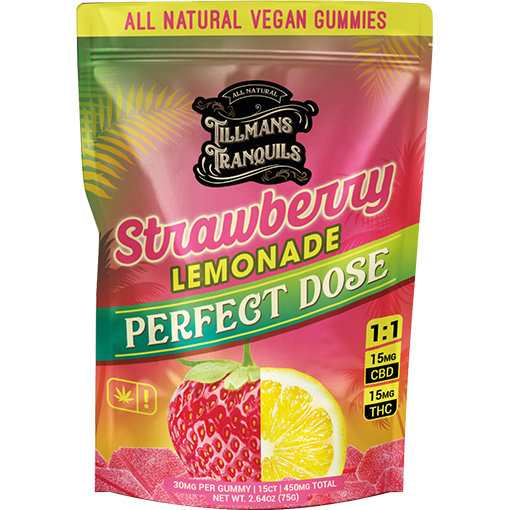
View the Gummies →Cherry Sleep Perfect Dose Gummies
A blended cannabinoid gummy containing CBD, CBN and 5 mg hemp-derived Delta-9 THC per gummy.
View the Gummies →Happy Time High Live Rosin Gummies
A hemp-derived Delta-9 product with 10 mg THC per gummy—an example of the kind of currently marketed product that makes future federal per-serving limits especially consequential.
View the Gummies →Before ordering any THC-containing product, check the Cbdeeme Hemp Law Checker for your state.
Become a Fountain of Knowledge
Understanding the law is easier when the cannabinoid alphabet soup makes sense too:
Frequently Asked Questions About the Lawful Hemp Protection Act
Has the Lawful Hemp Protection Act passed?
No. H.R. 9830 has been introduced in the U.S. House and referred to House committees, but as of September 15, 2026, it has not passed the House or Senate and is not law.
What is H.R. 9830?
H.R. 9830 is the bill number for the Lawful Hemp Protection Act in the U.S. House of Representatives. It proposes a new federal regulatory framework for hemp and hemp-derived cannabinoid products.
Would H.R. 9830 stop the federal hemp ban?
If enacted in its current form, H.R. 9830 would repeal Section 781, the federal provision behind the coming restrictive hemp definition, and replace it with a different regulatory framework. It has not yet been enacted.
Would Delta-9 THC gummies still be legal under the Lawful Hemp Protection Act?
The bill would create a potential federal pathway for regulated hemp-derived THC products, but they would be subject to cannabinoid limits, age restrictions, testing, labeling, manufacturing and other requirements. FDA would be directed to establish maximum cannabinoid amounts.
What would H.R. 9830 do to THCA?
The proposed hemp definition would use a 1% total-THC standard that includes THCA. High-THCA material exceeding that total-THC threshold should not be assumed to qualify as hemp under the proposal simply because its Delta-9 THC concentration is low before heating.
Would CBD still be legal?
H.R. 9830 expressly contemplates hemp-derived cannabinoid products, including products containing CBD. But those products would operate within the bill’s federal manufacturing, testing, labeling and other regulatory requirements if the proposal became law.
Would hemp products become 21+?
H.R. 9830 would prohibit the sale of hemp-derived cannabinoid products to people under age 21. The introduced text is broader than an age restriction applying only to intoxicating Delta-9 THC products.
When could H.R. 9830 become law?
There is no guaranteed timetable. The bill would need to advance through Congress and receive presidential approval. It could also be amended, incorporated into other legislation or fail to advance.
Does the December 11, 2026 hemp deadline still matter?
Yes. H.R. 9830 has not replaced current law. H.R. 6500 temporarily limits the application of most Section 781 changes until December 11, while a narrower provision still matters beginning November 12. Congress would need to take further action to change the longer-term outcome.
The Bottom Line
The Lawful Hemp Protection Act is worth watching because it puts a concrete alternative to Section 781 on the congressional table.
It would not recreate the lightly regulated hemp market that emerged after the 2018 Farm Bill. Far from it. H.R. 9830 proposes age limits, federal cannabinoid limits, accredited testing, manufacturing rules, labeling requirements, domestic sourcing, federal taxes and restrictions on certain synthetic or artificially modified cannabinoids.
But the core policy choice is very different: regulate a legal national hemp-derived cannabinoid market rather than allowing Section 781’s much narrower definition to become the long-term federal standard.
For now, H.R. 9830 remains a proposal. Cbdeeme will keep this page updated as the bill moves—or does not move—through Congress.
Primary Sources & Further Reading
- U.S. Government Publishing Office — H.R. 9830, Lawful Hemp Protection Act
- Full Introduced Text — H.R. 9830
- Congress.gov — H.R. 9830 Legislative Tracker
- Rep. Andy Barr — Lawful Hemp Protection Act Introduction
- The White House — H.R. 6500 Signed Into Law, September 2, 2026
- U.S. Government Publishing Office — H.R. 6500, Section 2019
- U.S. Government Publishing Office — Public Law 119-37, Section 781
Important: This article is provided for general informational and consumer-education purposes only and is not legal advice. H.R. 9830 is proposed legislation and may be amended, replaced, incorporated into other legislation or fail to advance. Federal and state hemp laws, regulations, agency interpretations and enforcement policies can change. For decisions involving legal compliance, consult qualified legal counsel and review current federal and state primary sources.
